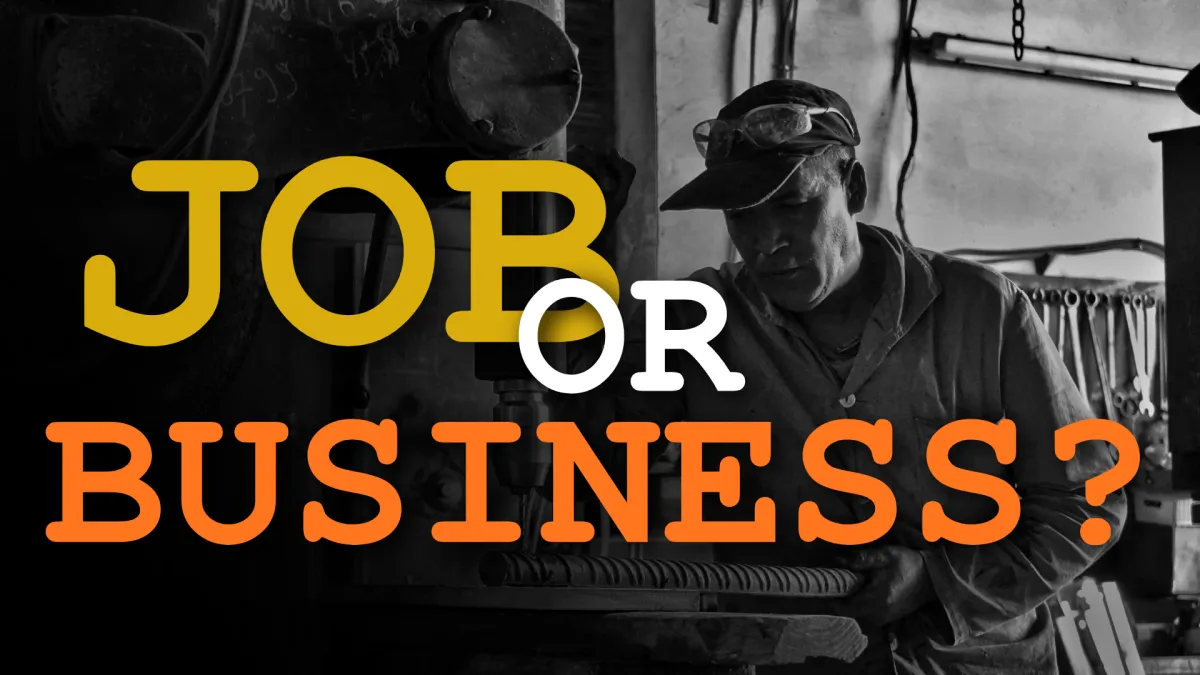
You Didn’t Build a Business. You Built a Job With Your Name On It.
You probably know someone like this.
They own a service company — restoration, HVAC, plumbing, electrical, landscaping, maybe construction. They’ve been at it for eight, ten, maybe fifteen years. They’re good at what they do. Their reputation is solid. They’ve got a solid crew, substantial revenue, and great customers who ask for them by name.
And they haven’t taken a real day off in three years.
The word “hustle” comes to mind when thinking about this person. But hustle eventually exposes a structure problem. And if you look closely, the signs have been there for a while.
Thanks for reading! Subscribe for free to receive new posts and support my work.
You Probably Know Someone Like This
They built their business the only way they knew how — by being the best at the work.
They showed up first.
Stayed latest
Handled the hard calls.
Made the tough decisions.
The business grew because they were good, and they stayed involved because the business needed them to be.
At some point, “involved” became “irreplaceable.”
Now the phone doesn’t stop. Not on weekends. Not on vacation. And sadly, this is why vacations don’t really happen. Every significant decision routes through them. The team is capable of executing, but not of deciding. Customers trust the business because they trust the owner, and the owner has quietly become the product.
From the outside, it looks like a thriving small business. From the inside, it’s a job with overhead.
The Tell-Tale Signs (What It Looks Like From the Outside)
If this person is in your network — a client, a referral, a colleague, someone you see at the chamber breakfast or the industry dinner — here’s what you’ve probably noticed without naming it.
The Phone Never Goes Quiet
They’re at dinner and they take the call. They’re at their kid’s game and they take the call. They’ve told you they’re “trying to step back a little,” but you haven’t seen it yet. The phone is the tell. An owner who can’t leave their phone is an owner whose business isn’t built to run without them.
Vacations Are a Negotiation, Not a Right
They’ve talked about taking a trip. It gets planned, postponed, condensed, or quietly dropped. When they do get away, they’re checking in constantly. They come back more tired than when they left because they spent the whole time managing things remotely that should have been running without them.
The Business Stops When They Do
Ask them what happens if they’re out for two weeks. The honest answer is usually some version of “it slows down” or “my guys know the work, but I’d have to stay available.” That sentence — I’d have to stay available — is the clearest indicator that the business is owner-dependent. There’s no structure behind the curtain. There’s just them.
Why Smart, Hard-Working People End Up Here
This isn’t a failure of effort. The people who build owner-dependent businesses are almost always the hardest-working people in the room. The problem isn’t discipline. It’s identity.
They became successful by being the best technician. The work is what they know. The work is what built the reputation. The work is where they feel competent and in control. And somewhere in the growth of the business, nobody told them that the skills that got them here aren’t the skills that get them where they want to go.
Running a company requires a different skill set than doing the work. It requires the ability to delegate authority, not just tasks. It requires documented processes that transfer judgment from the owner to the team. It requires a structure where decisions have clear owners who aren’t all the same person.
Most owners were never taught this. They scaled the thing they knew — their own effort — until their effort became the ceiling.
That’s the bottleneck. Not the market. Not the economy. Not the team. Them.
What Happens Next (If Nothing Changes)
The business plateaus. Revenue bumps against a ceiling that corresponds almost exactly with how many hours the owner can work. Growth requires hiring, but hiring without structure just creates more chaos that routes back to the owner. The team gets frustrated because they can’t make decisions. The owner gets frustrated because nothing moves without them. Everyone stays busy. Nothing really improves.
Meanwhile, the personal cost compounds. The marriage takes the friction. The kids get the exhausted version of their parent. The health takes the hits that don’t show up until they do, all at once. The thing that was supposed to provide freedom has become the most demanding boss they’ve ever had.
This is not an unusual story. It is, in fact, the most common story in local service business ownership. The E-Myth documented it decades ago, and it’s still true. Owning the business doesn’t automatically mean owning your time.
What the Introduction Looks Like
If you know someone in this situation, there’s something you can do that most people in their life haven’t done: name it clearly and offer them a path.
Not “have you thought about delegating more?” Not “you should really take a vacation.”
Those conversations happen all the time and go nowhere, because the problem isn’t that they haven’t thought about it.
The problem is that they don’t have the structure to make it possible.
Use the link in the header to book time for a free conversation with me.
No pitch.
No program sell.
Just a clear-eyed look at what’s actually happening operationally — and what’s buildable.
The people who benefit most from this conversation are the ones who’ve been telling themselves they’ll figure it out eventually, while “eventually” keeps moving.
If that description fits someone you know, send them the link.
Or pass this along and let them read it for themselves.
They’ll recognize the job they built.
And they’ll know it’s time to build something different.
Subscribe to learn more about how we’ve helped owners get out of the drives seat, and turn their business into a asset that serves their life goals, rather than be a liability for their life.
The business should serve the life.
Let’s build it that way.